Beli
- 4.2
- Rating
- 100.00K
- Installs
- Free
- Price

 Analysis by App-foxy
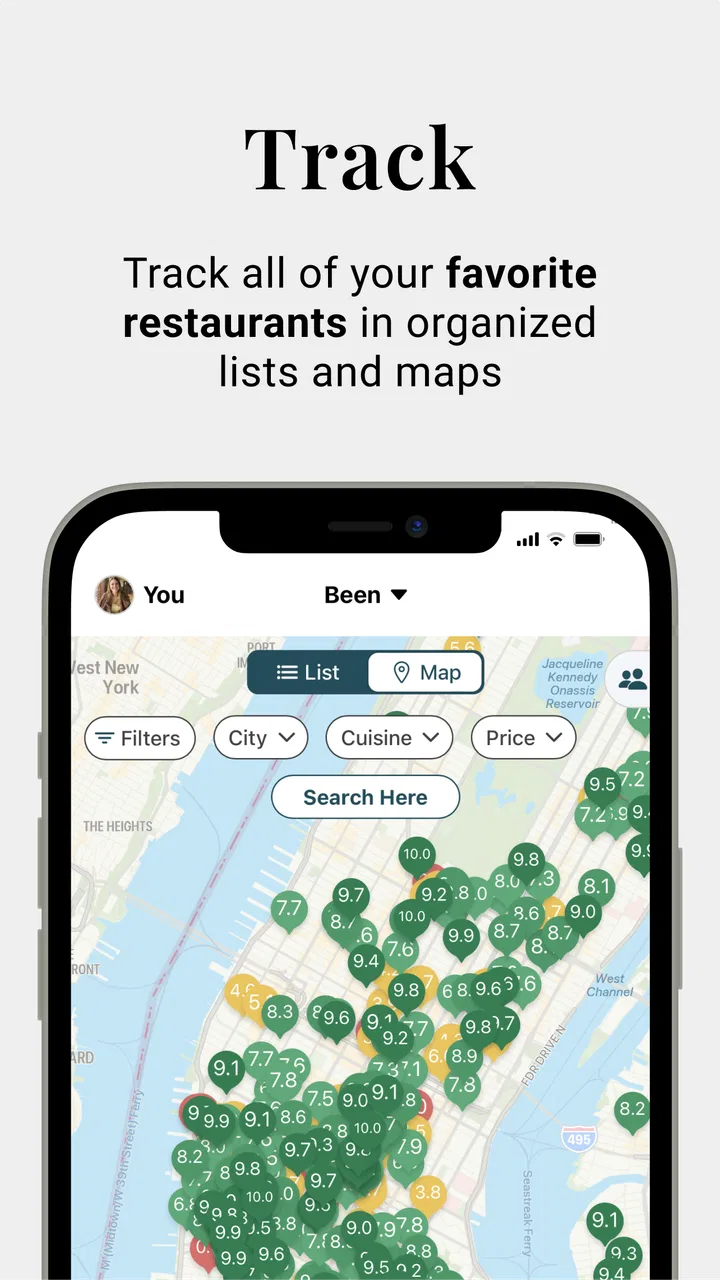
I like restaurant apps that help me make a decision instead of simply showing me a longer list of places. Beli takes that approach by turning my restaurant discoveries into a personal ranking system. It is a free Food & Drink app from Beli App, and its central idea is simple: save places, compare them, and keep track of which restaurants I actually prefer.
That sounds modest, but it changes the way I use a restaurant guide. Rather than searching from zero every time someone asks where to eat, I can build a record of places I have tried and use my own taste as the starting point. The app has reached over 100 thousand installs, with an average rating of 4.0 from around 1.6 thousand ratings, so it has attracted a meaningful group of people without feeling like an anonymous directory.
How the ranking idea works in everyday use
The most useful way to think about Beli is as a personal memory for restaurants. I can imagine using it after a weekend away, during a move to a new neighborhood, or simply after trying a place that I do not want to forget. The value grows gradually: one saved restaurant is mildly useful, while a well-maintained collection becomes a practical answer to the repeated question, “Where should we eat tonight?”
You May Also Like

 AccuWeather: Weather Radar
AccuWeather Review: A Quick, Clear Forecast for Everyday Decisions
For everyday plans, the best forecast is the one you can understand quickly. AccuWeather makes rain timing, radar, and local conditions easy to act on, with a few trade-offs.

 Hill Climb Racing
Why Hill Climb Racing Still Turns Crashes Into One More Run
A tiny car, a bumpy hill and one more upgrade: Hill Climb Racing keeps resurfacing because its simple chaos makes every near-miss feel personal.

 AliExpress - Shopping App
AliExpress Makes Global Shopping Feel Personal, but Shoppers Bear the Risk
AliExpress turns a global marketplace into a pocket-sized discovery engine. Its reach is useful, its shopping loop compelling, and its trade-offs easy to miss.

 Lords Mobile: Kingdom Wars
Lords Mobile Is a Kingdom-Building Routine, Not a Quick Match
A case-by-case verdict on the building, battles, device demands, and social commitments that make Lords Mobile rewarding for some players and exhausting for others.

 PDF Scanner app - TapScanner
TapScanner Makes Paperwork Easier to Capture, Check, and Share
TapScanner makes scanning with a phone feel less like a rescue operation and more like a dependable step in getting work done. Its capture tools are useful, though not flawless.

 Block Blast!
 Shows How Much a Puzzle Game Can Leave Out
A quiet grid game shows why puzzle players increasingly value instant clarity, repeatable skill and low-pressure play—and where the genre still needs to catch up.
More From Our News Desk
View All News


The ranking concept is more helpful than a basic bookmark list because it encourages comparison. A normal map service may help me locate restaurants, check opening information, or read public reviews. Beli is better suited to recording my own reaction. That distinction matters because a restaurant that is highly rated by strangers may not match my budget, preferred atmosphere, or favorite type of food.
I would not treat the ranking as an objective food critic’s score. It is personal, and that is precisely its strength. If I prefer quiet dining rooms, vegetarian choices, or relaxed lunches, my list can reflect those priorities more honestly than a general popularity ranking. The app becomes most useful when I rank places according to the occasions I actually have, not according to what I think a restaurant guide is supposed to value.
A practical habit is to add a restaurant soon after visiting it, while the details are still fresh. I would also avoid trying to rank every place with extreme precision. The important distinction is often simply which restaurant I would choose first, which one I would revisit with a particular friend, and which one I would only recommend if the circumstances were right. That makes the list easier to maintain and more realistic.
Where the internet matters most
Connectivity shapes the experience whenever Beli needs to show current restaurant information or process an action that depends on its online service. In those moments, the app feels like a living discovery tool rather than a static notebook. A stable connection makes browsing, checking places, and updating my collection feel immediate; a weak connection can turn the same task into a pause-filled experience.
This is especially noticeable when I am making a decision in an unfamiliar area. I may be walking through a neighborhood, meeting friends, or arriving in a city I have not visited before. In that situation, I want the app to respond quickly because the restaurant choice is happening in real time. If the connection is unreliable, I would rather prepare a shortlist before leaving than depend on a last-second search at the pavement.
That leads to an important distinction: Beli is strongest as a connected discovery and organization tool, not as a replacement for a paper list that is guaranteed to be available everywhere. I would use it while planning at home with dependable Wi-Fi, then rely on the information I have already reviewed when traveling. I would not assume that every browsing or updating action will behave the same way in a basement restaurant, on a train, or in a crowded event space.
There is also a social side to connected use. Restaurant decisions often involve other people, and a personal ranking can make a conversation more concrete. Instead of scrolling through unrelated recommendations, I can begin with places I already know and explain why one fits the occasion better than another. The app does not remove the need to discuss preferences, but it gives that discussion a useful starting point.
Using it while moving around
Beli makes the most sense for people who try restaurants in several neighborhoods or travel often enough to forget where they enjoyed a meal. A personal ranking can prevent a good restaurant from disappearing into old messages, camera photos, or a map pin I never open again. For someone who eats out regularly, that memory function may be more valuable than another stream of generic recommendations.
My preferred mobile workflow would be deliberately short. I would save a place when I discover it, make a quick judgment after eating, and return later to refine the order when I have more context. Trying to write a complete review from a busy table is not necessary for the app’s main purpose. The ranking itself is the useful signal, while extra detail should support future decisions rather than become homework.
There is a subtle trade-off here. A restaurant list made on a phone is convenient, but phones also encourage rushed decisions. If I rank a place immediately after a disappointing wait, I might judge the whole restaurant more harshly than I would after considering the food and atmosphere separately. I would use the first entry as a reminder, then revisit my ranking after the emotion of the visit has settled.
The app should appeal to couples, groups of friends, food-focused travelers, and people who have recently moved. It can also help someone who is responsible for choosing a restaurant for a family gathering and wants to avoid repeating the same safe option. On the other hand, a person who rarely eats out or already keeps a carefully organized restaurant notebook may not gain much from adding another system.
What happens when a connection fails
Connectivity problems are not just technical annoyances here; they affect the timing of the decision. If I am trying to find a restaurant while a group is waiting, a delayed response can make the app feel less useful than a familiar map service or a quick message to a friend. I would avoid making Beli my only plan for an important meal, particularly when I am in an unfamiliar place and have not prepared alternatives.
A sensible recovery routine is to stop repeatedly refreshing and switch to information I have already reviewed. If I know the neighborhood, I can continue with a saved choice. If I do not, I would use another available method to locate an open restaurant, then return to Beli later to record the experience. That separation keeps a temporary network problem from becoming a failed evening.
It is also worth distinguishing between a connection failure and a memory failure. If the app cannot load something at the moment, that does not mean the restaurant has disappeared from my personal history. I would give the service another try when the connection improves rather than immediately rebuilding my list elsewhere. At the same time, I would keep critical booking details or meeting instructions in a separate place when the occasion is important.
The recovery experience is therefore dependent on how I use the app. As a long-term ranking tool, a short interruption is manageable. As the sole source of restaurant information during a time-sensitive search, the same interruption is more serious. That is a fair limitation for a connected app, but it is one users should understand before relying on it while traveling.
Keeping mobile data use sensible
I would use Beli most efficiently by doing the exploratory part of the process when I have a dependable connection. Browsing a new area, reviewing several options, and organizing my rankings are tasks I can handle before leaving home or while connected to trusted Wi-Fi. Then, when I am outside, I only need to make small decisions instead of loading everything from scratch.
This approach is useful even for people with generous data plans because it reduces friction. A busy restaurant district can be full of crowded networks and inconsistent reception, and a prepared shortlist is simply faster. It also encourages better judgment: I can compare restaurants calmly before friends are waiting for an answer.
I would avoid treating every restaurant entry as something that needs constant editing. A ranking system becomes less useful if I spend more time maintaining it than using it. My advice is to save the places that I would genuinely consider again, keep the order broad enough to be meaningful, and clean up old entries when my preferences change. The goal is a reliable personal guide, not a complete database of every meal.
For privacy-conscious users, the main practical question is how comfortable they are keeping their restaurant activity inside a connected service. I would review the app’s current access and account choices during setup and use only the functions I need. That is good practice with any app that organizes personal habits, especially one that can reveal where and how often I like to eat.
How it compares with familiar alternatives
Maps are usually better when my first question is logistical: what is nearby, when might it be open, and how do I get there? Public review platforms are often better when I want a broad sample of opinions before visiting a completely unknown restaurant. Beli occupies a different space. It is most valuable after I have started forming my own opinions and want those opinions to guide future choices.
A notes app is more flexible for writing detailed impressions, saving menus, or recording a complicated food itinerary. However, notes can become difficult to compare when the list grows. Beli’s ranking-centered approach is more focused. I give up some free-form flexibility in exchange for a structure that helps answer a direct question: which place do I prefer?
Social media can be excellent for discovering fashionable restaurants, but it often emphasizes what is new or visually interesting. Beli is better for the quieter part of the process: remembering whether I personally enjoyed somewhere enough to return. That makes it less exciting as a discovery feed, but potentially more useful over time.
The trade-off is that a personal ranking needs personal input. If I do not add places or update my opinions, the app cannot magically know which restaurant suits tonight’s budget, group size, or dietary needs. Someone looking for a fully automated recommendation engine may prefer a service built around broad reviews and filters. Someone who wants their own taste to remain central will probably appreciate Beli more.
Who should use it, and who should skip it
I would recommend Beli to anyone who repeatedly says, “I know a good place, but I cannot remember its name.” It is particularly suitable for restaurant enthusiasts who want a running order of favorites, travelers who revisit cities, and friends who regularly exchange food recommendations. The free price also makes it easy to try without turning the decision into a financial commitment.
I would be more cautious recommending it to someone who wants detailed restaurant research before every visit. The app’s personal-ranking idea does not replace checking practical details or reading current public feedback. It also may not suit a person who dislikes maintaining lists, because its usefulness depends on making small updates after real visits.
The Everyone content rating makes it broadly approachable, including for families deciding whether to explore it together. Still, suitability is not only about age. A user should also consider whether a personal ranking is the kind of organization they will actually keep using. If the answer is no, a simple note with a few favorite restaurants may be more efficient.
Version, maturity, and the overall experience
Beli was released on October 16, 2022, and the current version is 9.1.2. I read that as a sign that the app is an established product rather than a brand-new experiment, while still being something that can evolve. The developer is Beli App, and the service has built enough adoption to show that the ranking concept resonates with more than a tiny group of early users.
The four-point average is encouraging but not flawless. That feels consistent with my view of the product: the idea is clear and useful, yet its value depends heavily on personal habits, network conditions, and how much information I expect from a restaurant app. It is not trying to solve every part of dining out, and users who expect a complete booking, navigation, and review replacement may find the experience narrower than expected.
What I like most is the shift from endless searching to deliberate remembering. I can use other services to discover what exists, but Beli gives my own experiences a stronger role in deciding what comes next. The best results come from treating it as a curated personal shortlist, not as an authority that tells me where everyone should eat.
My connectivity verdict
Connectivity is both an advantage and a boundary for Beli. When I have a reliable connection, the app fits naturally into discovery, planning, and quick restaurant decisions. When I am offline or dealing with unstable service, I would rather depend on a shortlist I prepared earlier than expect the app to carry the entire decision.
My final recommendation is positive for people who want a personal restaurant ranking and are willing to maintain it lightly. I would install it before a trip, begin with places I already know, and use it alongside—not instead of—maps and current restaurant information. If that workflow sounds useful, this free Food & Drink app offers a focused way to turn scattered meals into a practical guide shaped by my own taste.
FAQs for Beli
01What is Beli and what does it offer?
Beli is a social app designed to enhance your dining experiences. It allows users to explore new restaurants, share reviews, and connect with friends over shared culinary interests. With Beli, you can discover trending spots in your area, access personalized recommendations, and even make reservations—all within the app.
02Is Beli free to use, or does it require a subscription?
Beli is free to download and use, offering a range of features without any costs. However, it also provides optional in-app purchases or premium features that enhance the user experience, such as advanced search filters or exclusive dining offers. Users can enjoy the core functionalities without any mandatory subscriptions.
03How does Beli ensure the accuracy and reliability of its restaurant reviews?
Beli employs a community-driven review system where users can rate and review dining experiences. To ensure accuracy, it encourages detailed feedback and uses algorithms to highlight trustworthy reviews. Additionally, Beli's community guidelines prevent spam and fraudulent reviews, fostering a reliable platform for restaurant recommendations.
04Can I connect with friends on Beli, and if so, how does it enhance the experience?
Yes, Beli allows users to connect with friends, enhancing the social aspect of dining. By sharing restaurant visits and reviews, users can see recommendations from their network, plan group outings, and explore new places together. This interactive feature makes Beli not just an app but a social dining experience.
05What platforms is Beli available on, and are there any system requirements?
Beli is available on both Android and iOS platforms, ensuring wide accessibility. For optimal performance, users should have devices running Android 8.0 or later, or iOS 12.0 or later. These requirements ensure that users can enjoy all features smoothly, from exploring new eateries to connecting with fellow food enthusiasts.
Pros
- User-friendly interface enhances accessibility.
- Secure payment options for peace of mind.
- Wide range of products available for purchase.
- Efficient customer service for quick resolutions.
- Frequent discounts and promotions.
Cons
- Limited international shipping options.
- Occasional app crashes reported by users.
- Some products may have delayed delivery.
- In-app advertisements can be intrusive.
- Limited payment methods available.

Beli
Gallery